

The Cost of Control
How Forcing the Market Is Forcing You Into Poverty

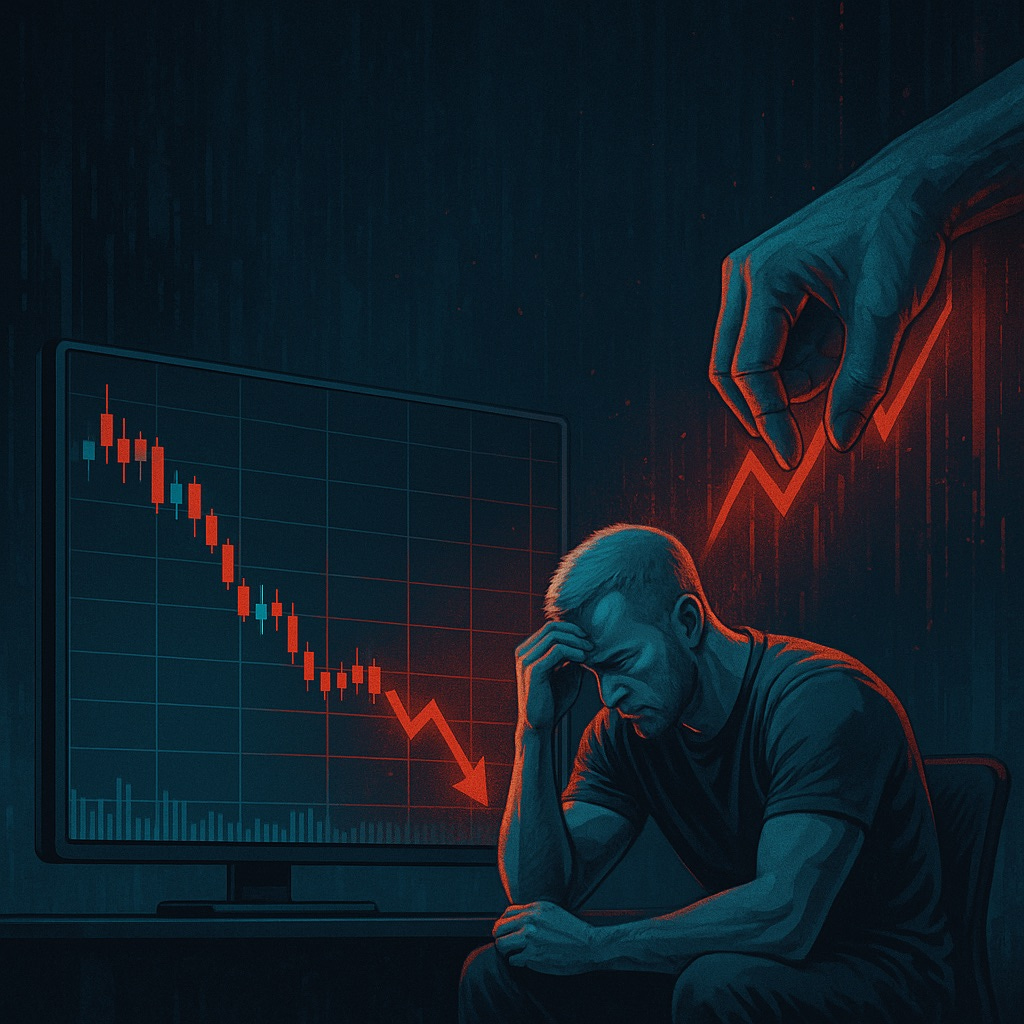
“He who rushes ahead doesn’t go far.”
— Tao Te Ching
Let me say something hard right out of the gate:
Most traders are losing because they’re trying to feel productive.
Not profitable.
Not patient.
Productive.
They grew up poor—or at least, without wealth—and their entire framework for earning money was built on this simple belief:
If I’m not constantly working, I don’t deserve to earn.
So what happens when you drop someone with that belief system into the world of day trading?
You get a pressure cooker of anxiety, forced trades, and an identity that’s addicted to movement.
The Lie of Productivity
I used to wake up every morning with the same thought: “Let’s get to work.”
That was the problem.
Work, to me, meant doing something. Running faster. Cutting onions. Pulling triggers.
Sitting and watching a chart? That felt like failure. It felt lazy. It felt wrong.
Why? Because no one had ever shown me that waiting could be valuable.
No one had ever said,
“Patience is action.”
“Discipline is doing.”
“Profit comes from non-doing.”
And so I’d sit at my desk with this gnawing urge to be “on.”
That urge destroyed thousands of trades, tens of thousands of dollars, and years of my life.
The Market Is Not a Job—It’s a Mirror
Here’s where it gets brutal.
Every time you try to force the market to comply,
you’re not trading your system—
you’re trading your trauma.
You’re trading the belief that being still is lazy.
You’re trading the voice of your father telling you to “do something with your life.”
You’re trading the buried shame of being broke, or being scared, or not feeling like a man unless you’re working.
But the market doesn’t pay for hard work.
It pays for right timing.
It pays for clarity.
It pays for patience.
In short, it pays the opposite of what most of us were trained to be.
Why Forcing = Financial Suicide
Let me show you how this plays out:
You have a plan.
You wait 10 minutes.
The trade hasn’t appeared.
Your old subconscious story kicks in: “I’m wasting time. I need to be productive. I can’t sit here doing nothing.”
You take a setup that’s off-plan, misaligned, premature.
It loses.
You feel shame.
You double down on effort.
You spiral.
And yet it all felt… logical.
Because your definition of value is action.
But trading isn’t construction work. It’s not waiting tables.
You don’t get paid for showing up.
You get paid for mastering yourself in a zero-feedback environment and executing when the market whispers, “Now.”
You Can’t Force Flow
Look, I am an Ironman athlete. A Marine. A chef, a coach, a father.
I know what it means to push.
But trading taught me what it means to release.
Flow doesn’t come from pressure.
It comes from precision.
From alignment.
From a deep internal stillness that allows you to read the market instead of trying to write it.
This was my shift:
I stopped trying to earn money like a poor man—through effort.
And I started receiving money like a master—through restraint.
The Tao of Trading
The Tao teaches us:
“Do your work, then step back. The only path to serenity.”
In trading, doing your work means preparing your levels, understanding the narrative, visualizing the scenario.
Then the work is done.
After that, your job is not to work harder.
Your job is to wait with conviction.
It’s not passive.
It’s the deepest form of presence.
A Final Word: You’re Not Broken—You’re Conditioned
If this is hitting you in the chest right now, good.
You’re not alone.
You’re not broken.
You’ve just been conditioned to believe that effort equals worth.
But this game doesn’t care about your effort.
It only rewards your awareness.
So if you want to win—really win—you’ve got to let go of the need to control.
You’ve got to retrain your nervous system to be still.
You’ve got to build your wealth from patience, not pressure.
Want help doing that?
That’s what I built The Shadow’s Edge for.
To guide traders like you through the unlearning, the reprogramming, and the real work that leads to consistent profits.
Because control doesn’t make you rich.
But mastering the urge to control?
That’s how you earn like a pro.
Stephan